
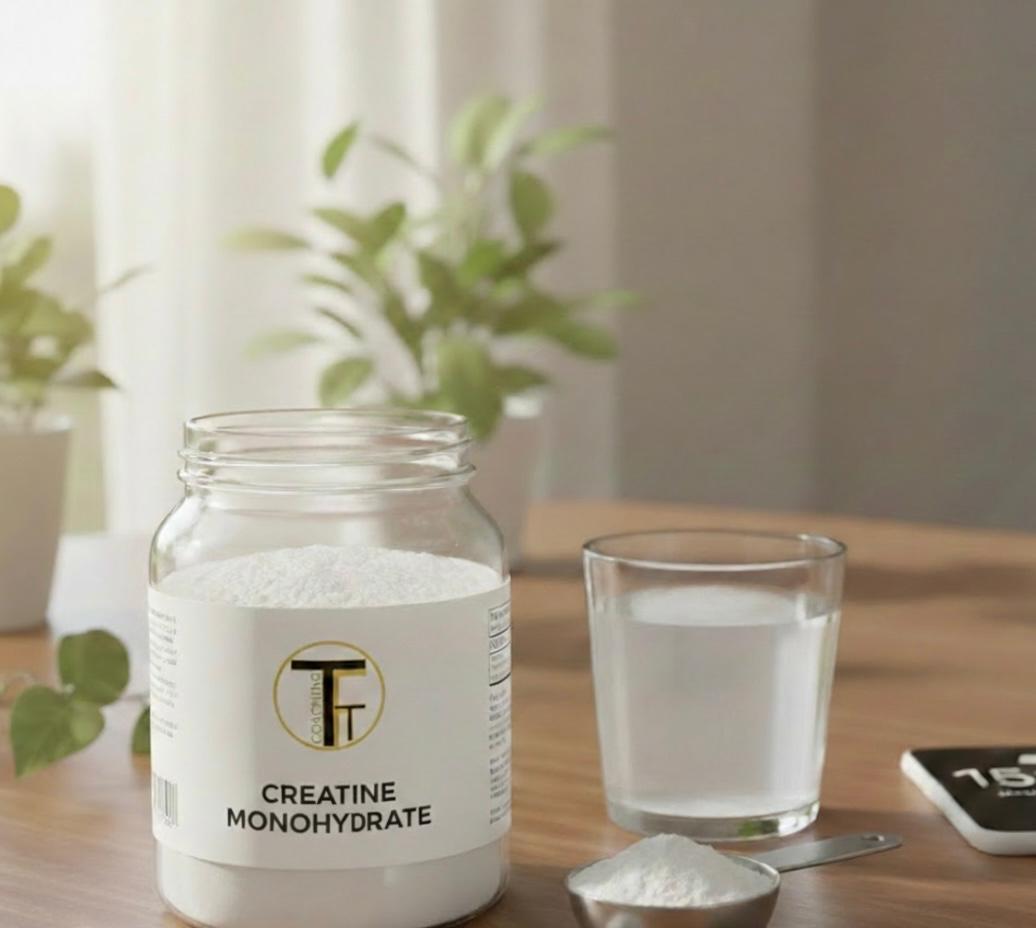
/Creatine is one of the most popular supplements in the fitness world — and also one of the most misunderstood. Some people swear by it, others avoid it due to myths about weight gain or safety.
What Is Creatine?
Creatine is a naturally occurring compound found in small amounts in foods like red meat and fish. Your body also produces it on its own. About 95% of your creatine is stored in your muscles, where it plays a key role in energy production. The other 5% is stored in your brain, Heart and other tissues with high ATP turnover.
How Creatine Works in the Body
Creatine helps regenerate ATP (adenosine triphosphate), which is your body’s primary energy source for short, high-intensity movements. Things like heavy lifts, sprints, jumps, or explosive athletic movements.
More available ATP means you can push harder for a few extra reps or sustain higher power output and over time, that adds up.
Strength and Performance Benefits
The most well-established benefit of creatine is improved strength and performance. Dozens of studies show that creatine supplementation can increase:
- Max strength
- Training volume
- Power output
This makes it especially effective for resistance training,Athletic movements like sprinting and other anaerobic activities.
Muscle Growth and Recovery
Creatine doesn’t directly build muscle on its own, but it creates the conditions for muscle growth. By improving workout performance and supporting recovery, it allows you to train more effectively over time.
Creatine also increases water content inside muscle cells. While this can cause a small increase on the scale, it’s intracellular water not Body fat.
Cognitive and Brain Health Benefits
Creatine’s benefits aren’t limited to the gym. Research suggests it may support brain function, particularly in situations involving mental fatigue, stress, or lack of sleep. Some studies show improvements in memory, reaction time, and cognitive performance.
This makes creatine interesting not just for athletes, but also for students, professionals, and anyone who relies heavily on mental performance.
Is Creatine Safe?
Creatine is one of the most extensively studied supplements available. For healthy individuals, long-term use at recommended doses (typically 3–5 grams per day) has consistently been shown to be safe.
Staying well-hydrated is advised, but there’s no strong evidence linking creatine to kidney damage in healthy users.
Who Should Consider Taking Creatine?
Creatine may be beneficial if you:
- Lift weights or train intensely
- Participate in sprint or power-based sports
- Want to improve muscle mass or recovery
- Are interested in cognitive performance
My honest opinion is that if you’re considering taking creatine, you probably should do it! If you’re a healthy individual and are looking to reap some of the benefits creatine provides. It’s affordable and has very minimal side effects. Of course for safety please speak to a medical professional before beginning to take creatine.